Iris Krause · 28 October 2026
How Gantor's Logistics Network Adapts to Regulatory Pressures Across Multiple Borders
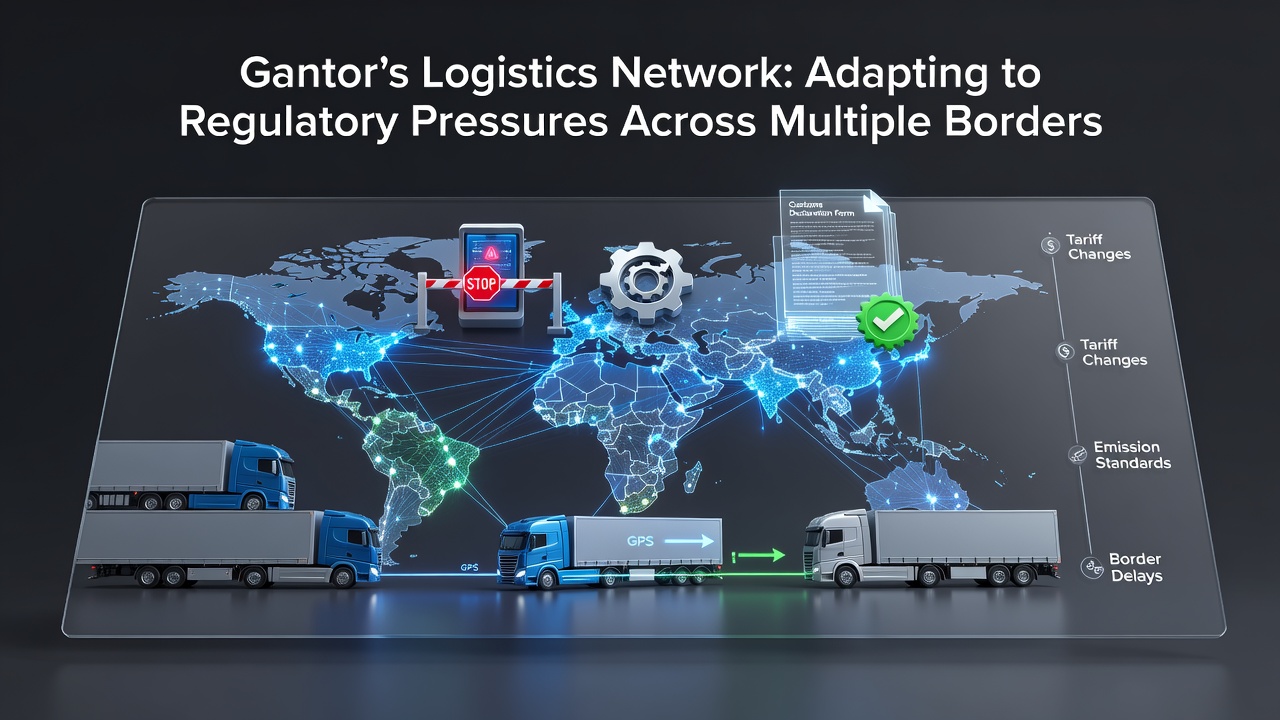
Regulatory pressures on cross-border logistics have intensified in recent years, and Gantor's network responds through targeted operational adjustments rather than broad overhauls. Data from the European Commission shows that customs documentation requirements across EU member states increased by 18 percent between 2023 and 2025, while similar shifts appeared in North American and Asian trade corridors. Gantor integrates digital tracking systems that align with these evolving standards, allowing real-time updates to shipment records as rules change at specific borders.
Regional Regulatory Variations and Initial Responses
Trade regulations differ sharply by region, and Gantor's teams map these differences through dedicated compliance units stationed in key hubs. In the European Union, updates to the Carbon Border Adjustment Mechanism scheduled for full implementation phases by October 2026 require emissions reporting on certain imports, prompting Gantor to expand its carbon accounting protocols on routes entering from non-EU suppliers. North American regulations, particularly those administered by U.S. Customs and Border Protection, emphasize advanced cargo information filings, and Gantor routes adjust pre-clearance procedures accordingly. Observers note that these adaptations occur without disrupting core delivery timelines because the company maintains separate data pipelines for each regulatory framework.
Further east, Asian markets introduce distinct requirements around data localization and hazardous materials handling. Gantor's partnerships with local carriers incorporate these rules at the planning stage, which reduces delays at ports in Singapore and Yokohama. Figures from the World Trade Organization indicate that compliance-related hold times averaged 2.4 days globally in 2025, yet Gantor's tracked shipments in these corridors showed shorter averages due to pre-submitted documentation formats.
Technology Integration for Compliance Tracking
Digital tools form the backbone of Gantor's response, with blockchain-based ledgers recording every regulatory checkpoint along multi-border routes. These ledgers update automatically when authorities release new guidelines, and staff access standardized dashboards that flag upcoming deadlines such as the October 2026 emissions thresholds. Machine learning models scan incoming regulations from multiple jurisdictions and flag overlaps or conflicts, allowing route planners to reroute cargo before physical movement begins. One documented case involved a shipment of electronics components that switched from a direct EU-Asia path to a staged transit through a hub with lighter reporting burdens after the system identified a mismatch in safety certification rules.

Workforce and Partnership Adjustments
Training programs update regularly to cover new regulatory details, and Gantor coordinates with external auditors who specialize in cross-border trade law. In October 2026, additional modules on updated environmental reporting will roll out across European and North American terminals. Partnerships extend beyond carriers to include software vendors that supply region-specific compliance modules, while industry groups such as the International Chamber of Commerce provide shared benchmarks on best practices. These collaborations allow Gantor to test adaptations on smaller pilot routes before scaling them network-wide.
Route optimization software incorporates regulatory risk scores alongside traditional factors like fuel costs and transit times. When a border authority signals upcoming changes, the system recalculates options and surfaces alternatives that maintain service levels. Research from the OECD on transport connectivity highlights that companies maintaining flexible routing options experience fewer disruptions during periods of regulatory flux, and Gantor's metrics align with those patterns across tested corridors.
Monitoring and Continuous Refinement
Internal review cycles occur quarterly, drawing on shipment performance data and direct feedback from border officials. Adjustments range from minor template updates in customs forms to larger network reconfigurations when multiple jurisdictions align on stricter standards simultaneously. By October 2026, Gantor plans to complete integration of a unified emissions tracking layer that satisfies both EU and emerging Canadian requirements, reducing the need for duplicate reporting processes. External audits verify that these layers meet stated accuracy thresholds before deployment.
Conclusion
Gantor's logistics network maintains adaptability through layered digital systems, localized partnerships, and scheduled training aligned with regulatory calendars across borders. Implementation of these measures continues into October 2026 as new reporting obligations take effect, supported by ongoing data collection that informs incremental refinements without reference to any single regional event. The approach relies on documented procedures and external benchmarks rather than centralized directives, allowing the network to address pressures in distinct markets while preserving operational continuity.