Casey Richter · 30 September 2026
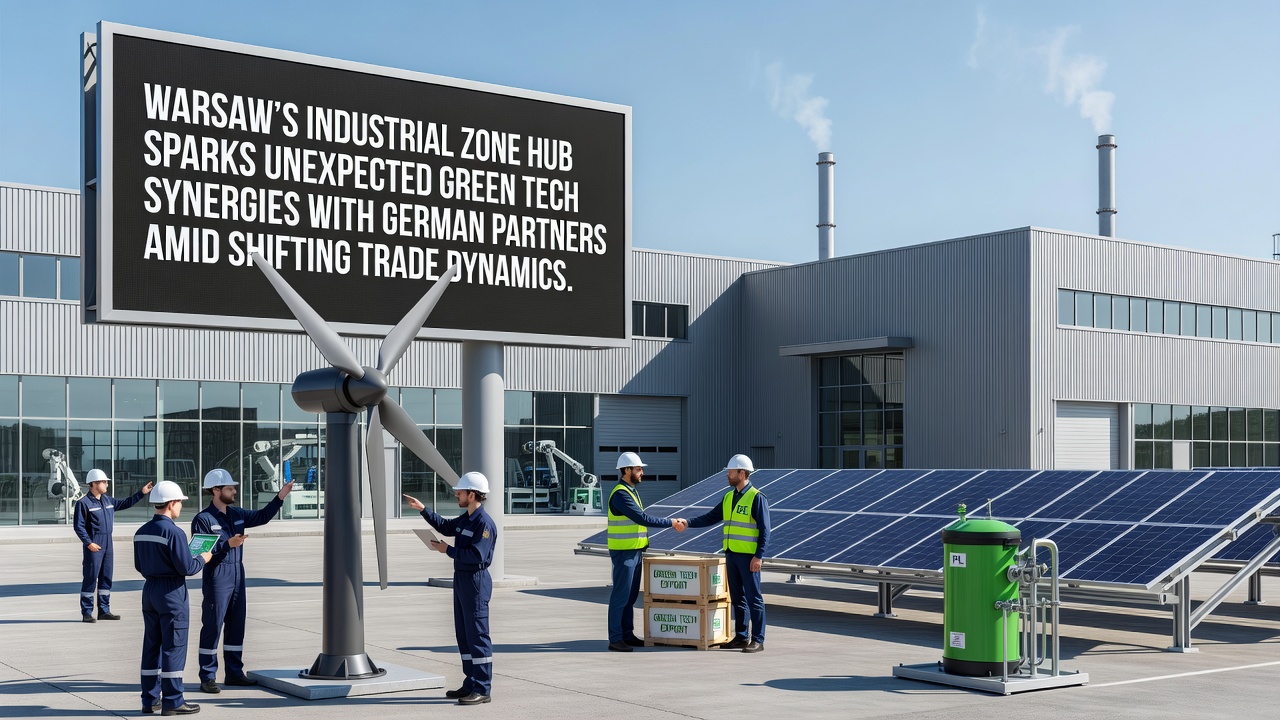
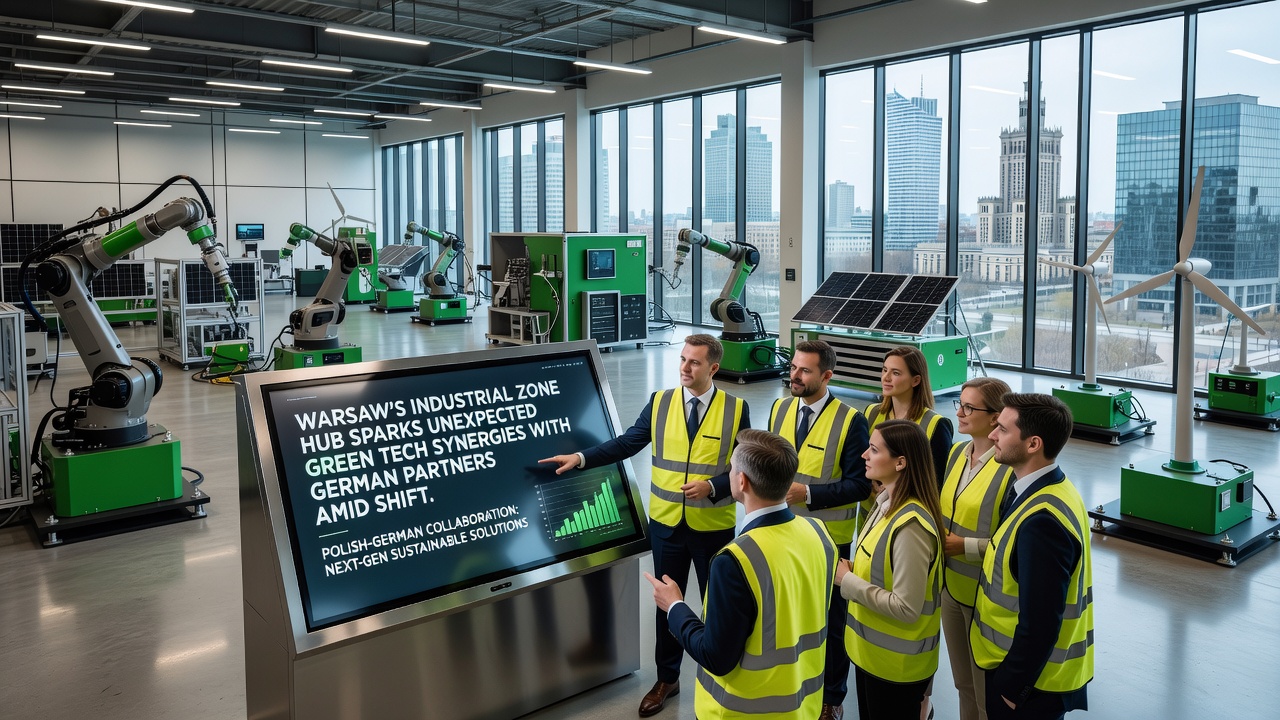
Warsaw's Industrial Zone Hub Sparks Unexpected Green Tech Synergies with German Partners Amid Shifting Trade Dynamics
Data from Polish trade authorities shows that Warsaw's industrial zones have expanded collaborations with German firms since early 2025, focusing on green technologies such as hydrogen storage systems and advanced battery recycling processes, while EU supply chain adjustments continue to influence cross-border operations.
Background on Warsaw Industrial Development
Warsaw's key industrial zones, including areas around the Praga district and the southern logistics corridors, have seen increased investment in sustainable manufacturing infrastructure, according to reports from the Polish Ministry of Development and Technology, and these zones now host facilities that integrate renewable energy sources directly into production lines.
Observers note that companies operating in these zones have adopted modular factory designs that allow quick adaptation to new environmental standards, and this flexibility has drawn interest from German engineering groups seeking reliable partners outside traditional Rhine Valley supply routes.
German Partnerships and Green Tech Focus
German companies specializing in clean energy components have formed joint ventures with Polish manufacturers in Warsaw zones, where they develop integrated systems for wind turbine components and electric vehicle charging networks, and figures from the German Federal Ministry for Economic Affairs and Climate Action indicate that bilateral projects in this sector grew by 18 percent between 2024 and 2026.
One project involves a shared research facility that tests next-generation photovoltaic materials under varying climate conditions, while another initiative coordinates the transfer of German recycling technology to Warsaw plants that process rare earth elements from discarded electronics.
Impact of Shifting Trade Dynamics
Trade adjustments within the European Union, including revised carbon border adjustment mechanisms that took full effect in September 2026, have prompted companies to reroute certain material flows through Warsaw hubs, and this shift has created opportunities for German partners to access Central European markets with lower logistics costs compared to direct shipments from western ports.
Researchers at the European Commission's Joint Research Centre have documented how these changes encourage localized production of green tech components, whereas earlier patterns relied more heavily on Asian suppliers for raw materials, and the new arrangements reduce exposure to tariff fluctuations that emerged after 2023 trade policy updates.
Specific Synergies in Practice
Polish firms in Warsaw zones now supply specialized coatings for German-made solar panels, while German partners provide precision machinery for Warsaw-based hydrogen electrolyzer assembly lines, and data compiled by the Organisation for Economic Co-operation and Development highlights that such exchanges have accelerated technology transfer in both directions since mid-2025.
Case studies from the Warsaw University of Technology describe a pilot program where waste heat from Polish metal processing plants feeds into German-designed district heating prototypes, and this integration has improved overall energy efficiency metrics at participating sites without requiring entirely new infrastructure investments.
Future Outlook and Related Developments
Industry groups such as the Polish Chamber of Commerce and the Federation of German Industries continue to track these collaborations through quarterly data exchanges, and upcoming regulatory reviews scheduled for late 2026 are expected to clarify further incentives for cross-border green tech projects.
Additional partnerships have formed around circular economy models, where Warsaw facilities handle end-of-life processing for German automotive batteries, and this arrangement aligns with EU directives on extended producer responsibility that emphasize regional recovery networks.
Conclusion
Available records demonstrate that Warsaw industrial zones have become nodes for green technology cooperation with German entities, driven by evolving trade conditions and supported by targeted infrastructure upgrades through September 2026, and continued monitoring by regulatory bodies will determine how these patterns develop in subsequent periods.