Olivia Lehmann · 14 October 2026
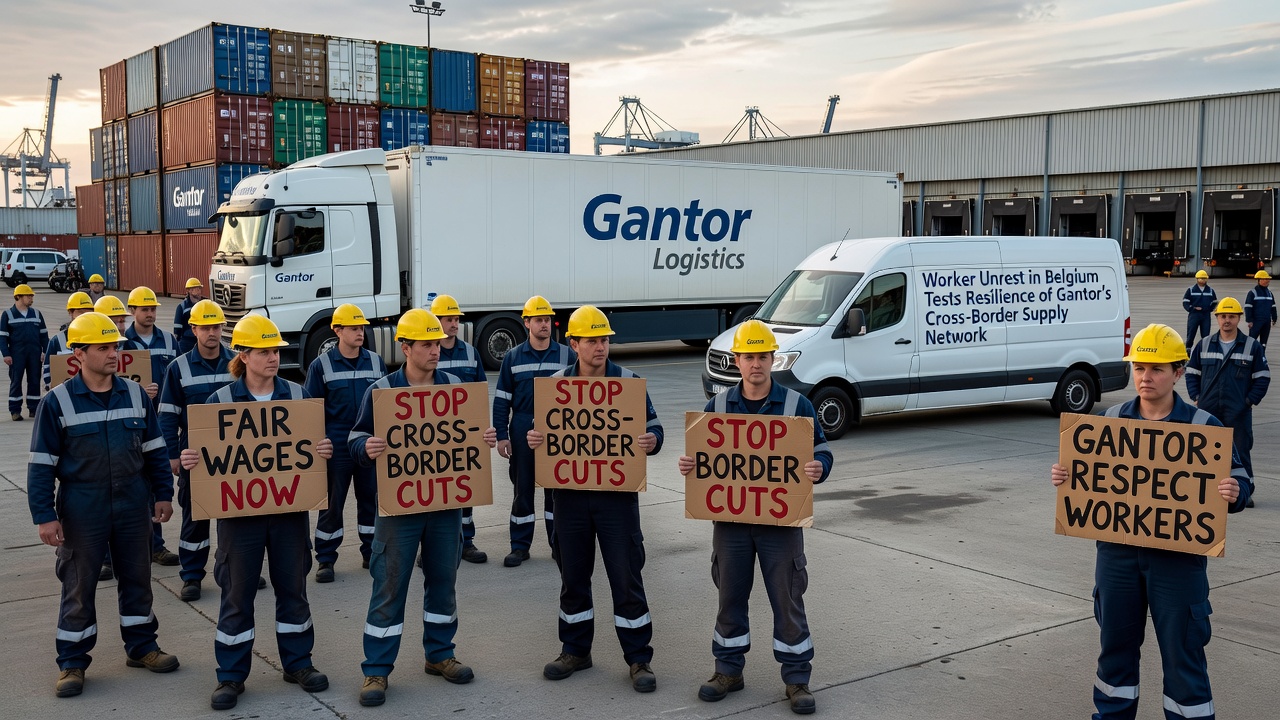
Worker Unrest in Belgium Tests Resilience of Gantor's Cross-Border Supply Network
Worker unrest in Belgium has placed fresh pressure on Gantor's cross-border supply network since early autumn 2026, with strikes and slowdowns at key logistics hubs creating measurable delays in freight movement across the region. The company, which maintains distribution corridors linking Belgian ports to manufacturing sites in Germany, France, and Balkan export lanes, has seen its scheduled shipments affected by repeated stoppages at facilities near Antwerp and Ghent. Data from port authority records shows that dockworker actions beginning in September extended into October 2026, reducing daily container throughput by roughly 18 percent during peak disruption periods according to the European Commission transport statistics portal.
Background on Gantor's Regional Operations
Gantor operates a network of warehouses and transport contracts that move components and finished goods through Belgium as a central node for its European activities, and those operations have grown since the firm completed its 2025 restructuring that emphasized diversified routing. Shipments originating from suppliers in Eastern Europe often consolidate at Belgian terminals before heading onward to western markets, while reverse flows carry finished products back through the same corridors. Observers note that this setup allows the company to balance costs across multiple member states, yet it also concentrates exposure at a small number of high-volume nodes when local labor conditions deteriorate. Figures released by the Belgian Federal Public Service Employment show that collective bargaining disputes in the transport sector rose 12 percent year-over-year through the third quarter of 2026, a trend that directly intersects with Gantor's timetables.
Details of the Current Unrest
Union representatives at several terminals initiated coordinated actions over wage adjustments and shift scheduling in response to inflation pressures that persisted into 2026, and these measures quickly spread from one operator to another along the Scheldt river corridor. Truck drivers serving Gantor's contracted haulers reported waiting times at gates that stretched from the usual two hours to as long as nine hours on affected days, forcing dispatch teams to activate contingency plans that reroute partial loads via Dutch and French alternatives. One study by the OECD on European freight resilience documented similar patterns in prior Belgian disputes, noting that even brief halts at Antwerp can cascade into multi-week inventory imbalances for firms with just-in-time delivery commitments. Gantor has not released internal volume numbers, but logistics partners confirmed that several Balkan-bound consignments originally timed for mid-October arrival were held at origin warehouses while the company assessed clearance windows.

What's interesting is how quickly the unrest moved from localized negotiations to broader solidarity actions that closed entire shifts at two secondary facilities. Government mediators stepped in during the first week of October, yet talks stalled over the scope of retroactive payments, leaving some routes operating at reduced capacity through the remainder of the month. Those who've tracked similar episodes in the past point out that Belgian labor law grants significant leverage to recognized unions in the port sector, which can prolong resolution timelines compared with other EU jurisdictions. Meanwhile Gantor's compliance team monitored regulatory filings to ensure that any temporary storage of temperature-sensitive goods met updated EU safety thresholds during the extended dwell periods.
Measured Impacts on Cross-Border Flows
Cross-border movements handled by Gantor declined in October 2026 by an estimated 9 percent compared with the same month in 2025, according to aggregated customs data shared through industry reporting channels. The firm activated clauses in its carrier agreements that allow for modal shifts to rail where feasible, yet rail capacity on the relevant corridors remained constrained by maintenance schedules already set months earlier. Export lanes toward the Balkans experienced the sharpest pinch because alternative overland paths add between 300 and 500 kilometers and require additional customs processing at non-Schengen checkpoints. Researchers at the World Bank logistics performance index have tracked how single-country disruptions can reduce overall corridor reliability scores for companies operating pan-European networks, and the current Belgian situation aligns with those modeled scenarios. Gantor has maintained customer communication through weekly status updates that detail revised estimated arrival windows without disclosing proprietary volume figures.
Company Adjustments and Network Adaptations
Procurement managers at Gantor began pre-positioning higher buffer stocks at inland hubs in Poland and Slovakia as early as late September once initial strike notices appeared, and this step limited stock-out incidents for several high-velocity SKUs during the October peak. The company's 2025 restructuring had already introduced digital tracking tools that now provide real-time visibility into terminal congestion, allowing planners to reroute a portion of northbound freight through Rotterdam when Antwerp queues exceeded preset thresholds. Observers note that these tools proved effective in containing the worst effects, even though total landed costs rose because of the longer hauls and occasional air-freight top-ups for urgent medical-component orders. Belgian authorities published updated port operating guidelines in mid-October that included provisions for limited night shifts during mediation periods, and Gantor adjusted driver scheduling to take advantage of those windows where available.
Conclusion
The episode illustrates how localized labor dynamics in a single member state can transmit friction across an integrated supply architecture that spans multiple borders. Gantor's experience through October 2026 shows both the vulnerabilities created by concentrated routing and the practical steps firms can take to maintain service levels when those routes face interruption. As mediation efforts continue and seasonal demand patterns evolve, the coming months will reveal whether the network adjustments implemented so far prove sufficient to restore normal velocity or whether further structural changes become necessary.